Student loan debt has become one of the biggest financial burdens for millions of graduates. Whether you’re fresh out of college or years into repayment, high monthly payments can eat into your budget, delay major life goals, and add unnecessary stress. The good news? There are legitimate, effective ways to lower your student loan payments and you may also be leaving money on the table by not claiming the student loan interest deduction on your taxes.
In this guide, we’ll walk through practical strategies to reduce what you owe each month, explain how the student loan interest deduction works, and show you how to use a student loan interest deduction calculator to estimate your tax savings accurately.
Why Lowering Your Student Loan Payments Matters?
Before diving into strategies, it helps to understand the real impact of high loan payments:
- They reduce your monthly cash flow for savings, emergencies, or investing
- They can delay milestones like buying a home or starting a family
- High debt-to-income ratios can hurt your credit approval odds
- Interest continues to accumulate the longer you take to pay it off
Lowering your payments isn’t about avoiding responsibility it’s about managing debt strategically so it doesn’t control your financial life.
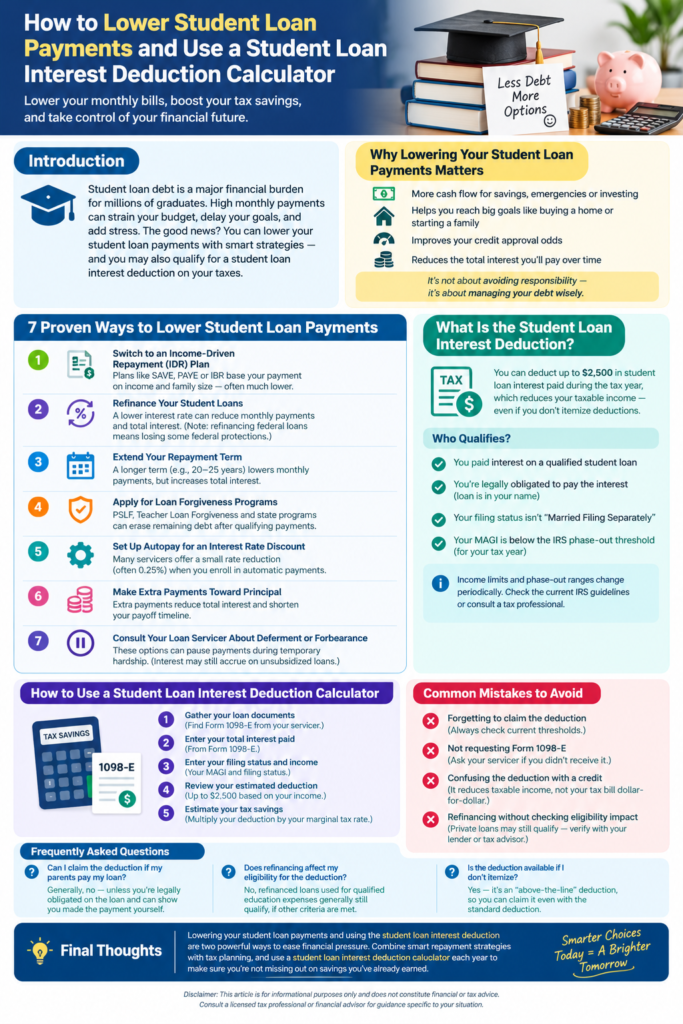
7 Proven Ways to Lower Student Loan Payments
1. Switch to an Income-Driven Repayment (IDR) Plan
If you have federal student loans, income-driven repayment plans (such as SAVE, PAYE, or IBR) calculate your monthly payment based on your income and family size rather than your total loan balance. This can dramatically reduce your monthly obligation, especially if you’re early in your career.
2. Refinance Your Student Loans
Refinancing with a private lender can lower your interest rate if you have strong credit and stable income. A lower rate means lower monthly payments and less paid over the life of the loan. Note: refinancing federal loans into a private loan means losing federal protections like forgiveness programs and IDR plans, so weigh this carefully.
3. Extend Your Repayment Termlo
Choosing a longer repayment term (e.g., 20–25 years instead of 10) lowers your monthly payment, though you’ll pay more in total interest over time. This works well as a short-term relief strategy.
4. Apply for Loan Forgiveness Programs
Public Service Loan Forgiveness (PSLF), Teacher Loan Forgiveness, and state-specific programs can eliminate remaining debt after a qualifying period of payments, particularly for those in nonprofit, government, or education jobs.
5. Set Up Auto pay for an Interest Rate Discount
Many loan services offer a small interest rate reduction (often 0.25%) when you enroll in automatic payments. It’s a simple, no-effort way to shave down your rate.
6. Make Extra Payments Toward Principal
When you have extra cash, applying it directly to the principal reduces the total interest that accrues, shortening your payoff timeline and lowering future interest costs.
7. Consult Your Loan Service About Deferment or Forbearance
If you’re facing temporary financial hardship, deferment or forbearance can pause payments. Use this cautiously, as interest may still accrue on unsubsidized loans.
What Is the Student Loan Interest Deduction?
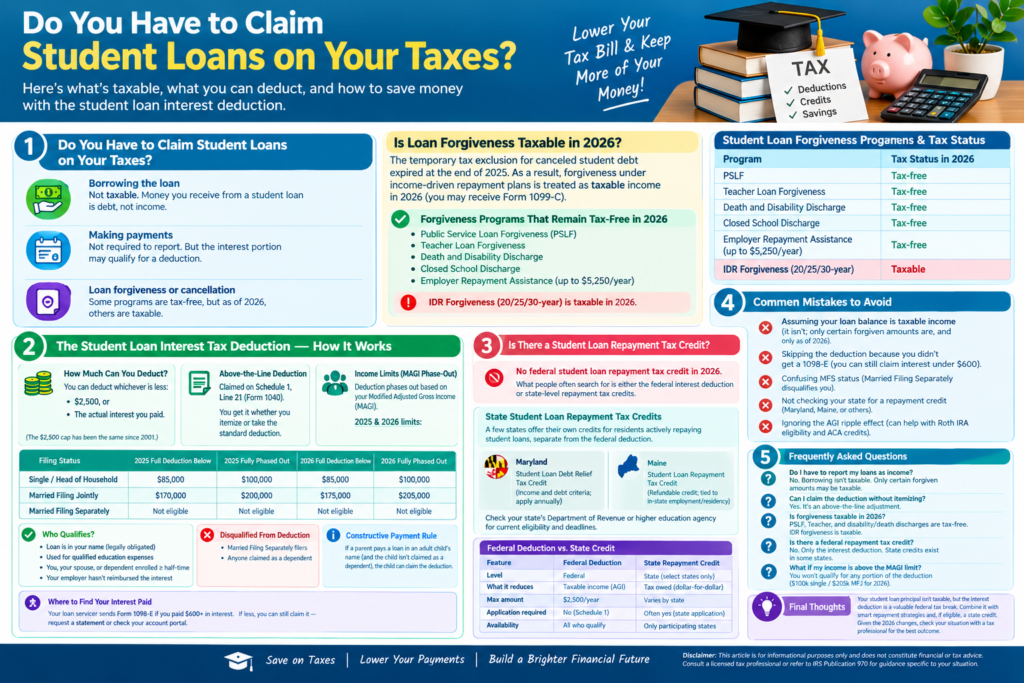
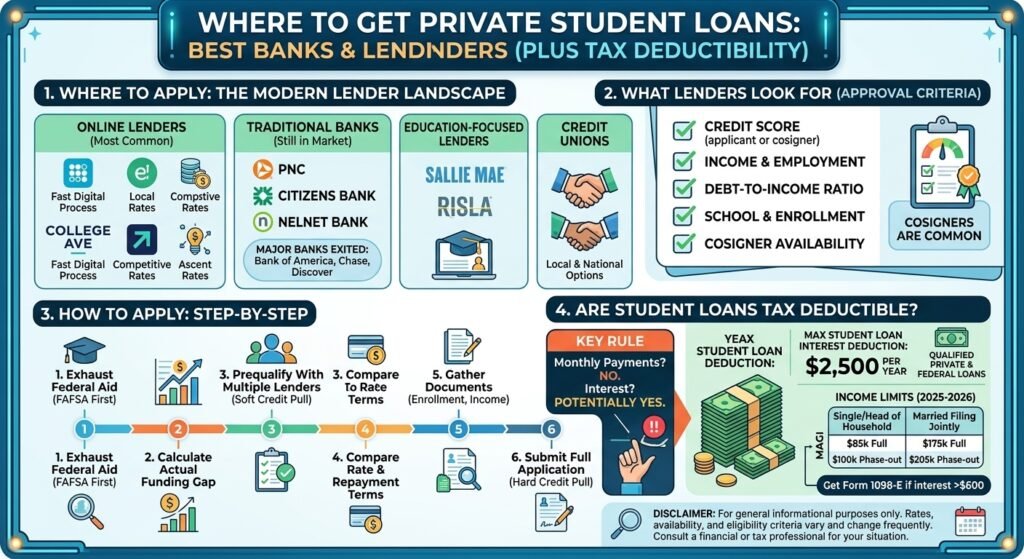
The student loan interest deduction allows eligible taxpayers to deduct up to $2,500 in student loan interest paid during the tax year, directly reducing their taxable income — even if you don’t itemize deductions.
Who Qualifies?
- You paid interest on a qualified student loan during the tax year
- You’re legally obligated to pay the interest (loan is in your name)
- Your filing status isn’t “Married Filing Separately”
- Your Modified Adjusted Gross Income (MAGI) falls below the IRS phase-out threshold for the given tax year
Because these income limits and deduction phase-out ranges change periodically, it’s important to check the current IRS guidelines or consult a tax professional for the most accurate figures for your filing year.
How to Use a Student Loan Interest Deduction Calculator?
A student loan interest deduction calculator helps you estimate exactly how much you can deduct and how much that deduction could save you on your tax bill. Here’s how to use one effectively:
Step 1: Gather Your Loan Documents
Locate Form 1098-E, which your loan services sends if you paid $600 or more in interest during the year.
Step 2: Enter Your Total Interest Paid
Input the exact amount of interest paid from Form 1098-E into the calculator.
Step 3: Enter Your Filing Status and Income
Since the deduction phases out at higher income levels, the calculator needs your MAGI and filing status to determine your eligible deduction amount.
Step 4: Review Your Estimated Deduction
The calculator will show your maximum allowable deduction (up to $2,500) based on your income bracket.
Step 5: Estimate Your Tax Savings
Multiply your deduction by your marginal tax rate to see the approximate dollar amount you’ll save giving you a clear picture before you file.
Common Mistakes to Avoid
- Forgetting to claim the deduction because you assume you don’t qualify always check current thresholds
- Not requesting Form 1098-E from your service if you didn’t receive it automatically
- Confusing the deduction with a credit it reduces taxable income, not your tax bill dollar-for-dollar
- Refinancing without checking eligibility impact private refinanced loans may still qualify, but verify with your lender and tax advisor.
Frequently Asked Questions
Q1. Can I claim the student loan interest deduction if my parents pay my loan?
Ans. Generally, no unless you are legally obligated on the loan and can show you effectively made the payment yourself.
Q2. Does refinancing affect my eligibility for the deduction?
Ans. No, refinanced student loans used for qualified education expenses generally still qualify, as long as other eligibility criteria are met.
Q3. Is the deduction available if I don’t itemize?
Ans. Yes, this is an “above-the-line” deduction, meaning you can claim it even if you take the standard deduction.
Final Thoughts
Lowering your student loan payments and taking full advantage of the student loan interest deduction are two of the most effective ways to ease financial pressure while paying off your debt responsibly. Combine strategic repayment planning with smart tax filing, and use a student loan interest deduction calculator each year to make sure you’re not missing out on savings you’ve already earned.
Disclaimer: This article is for informational purposes only and does not constitute financial or tax advice. Consult a licensed tax professional or financial advisor for guidance specific to your situation.